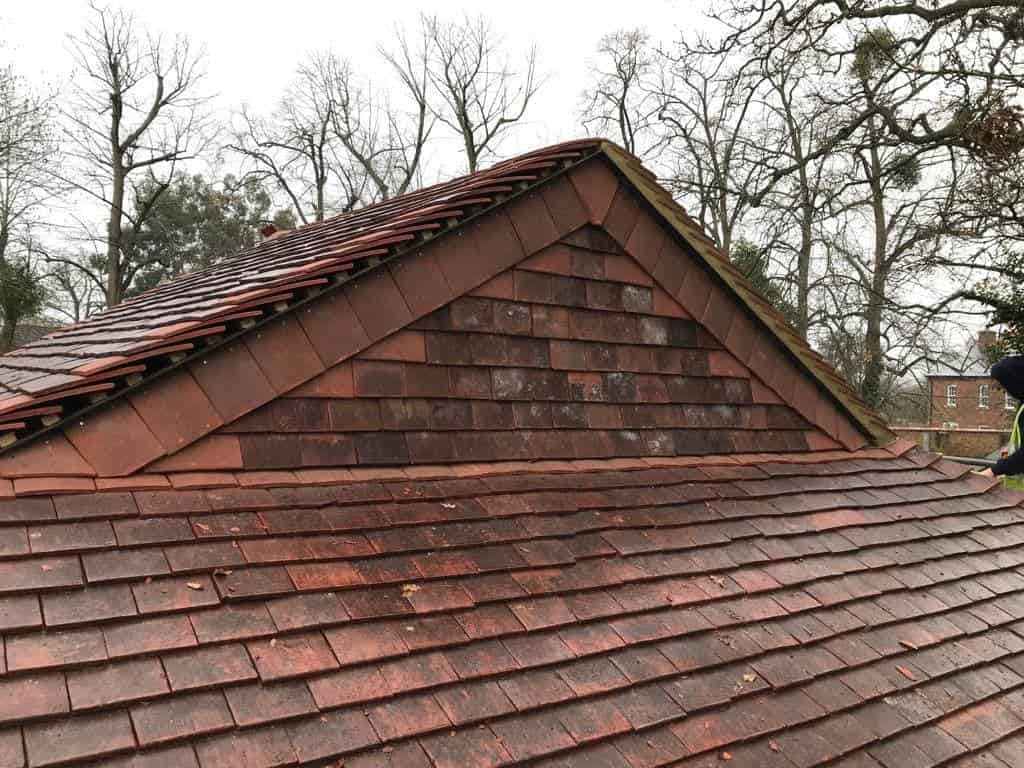
A leaking ceiling is one of the clearest signs that a roof needs attention, but it should not be treated as the only indication of a roofing problem. Roof defects frequently begin externally and develop gradually before moisture becomes visible inside the property. By the time water marks or dripping appear, the original weakness may have been present for some time.
For property owners in Sittingbourne, Kent, having a roof professionally inspected can help identify developing defects before they become obvious from inside the building. This does not mean that every roof without a leak needs repair. The value of an inspection is that it provides a clearer understanding of the roof’s actual condition, allowing localised problems to be addressed where necessary rather than waiting for them to become more extensive.
Can a Roof Have Problems Without Showing Any Visible Leaks?
Yes. A roof can contain slipped or cracked tiles, deteriorating flashing, vulnerable junctions, damaged mortar or other defects without immediately allowing enough water into the property to create an obvious internal leak.
Roofing systems contain several components that work together to manage rainfall. A developing weakness can therefore remain unnoticed until particular weather conditions expose it or deterioration progresses sufficiently for water to reach the interior.
A Leak Is Often a Later Symptom
Water dripping from a ceiling is the result of moisture successfully travelling through or around the roofing system and reaching the interior.
Before this happens, the external defect may already have been developing.
A tile may have shifted slightly, flashing may have deteriorated or a vulnerable junction may have started allowing small amounts of moisture through.
Inspection can identify these earlier warning signs without relying on internal leakage as the first indication that something is wrong.
Roof Problems Often Develop Gradually
Many roofing defects are progressive rather than sudden.
A small crack can become larger. A slightly displaced tile can move further. Mortar can gradually deteriorate, and a previously secure roof component can become increasingly vulnerable.
During the early stages, the roof may continue preventing obvious internal water penetration.
This period provides an opportunity to identify the problem while it remains relatively localised.
Slipped Tiles May Not Cause an Immediate Leak
A tile does not necessarily need to fall completely from the roof before it becomes a concern.
Slight movement can affect the way neighbouring tiles overlap and shed rainwater.
Depending on the position and extent of movement, an internal leak may not develop immediately.
Professional inspection can identify displaced tiles and determine whether they require attention before further movement occurs.
Missing Tiles Can Expose Vulnerable Areas
Where a tile has become completely displaced, the roof beneath it may be more exposed to rainfall and wind.
An obvious internal leak may still not appear immediately.
The underlying materials can provide some temporary resistance, and the location of the missing tile can influence how water behaves.
However, the covering is no longer functioning as originally intended, making early assessment worthwhile.
Small Cracks Can Be Difficult to See From the Ground
Cracked tiles are not always obvious when viewing a roof from garden level.
Some defects may be narrow, positioned higher on the roof or partially concealed by overlapping materials.
The roof may continue appearing complete despite localised damage.
Professional inspection provides a closer assessment of the covering and can identify defects that are difficult to recognise from below.
Broken Corners Can Affect Water Shedding
Not every damaged tile is completely broken.
Small sections or corners can become detached while most of the tile remains in place.
Whether this creates an immediate problem depends on the location and extent of the damage.
An inspection can establish whether the remaining tile continues to perform appropriately or should be replaced before deterioration progresses.
Flashing Can Deteriorate Without Obvious Interior Symptoms
Flashing protects vulnerable roof junctions and transitions.
Problems can develop where flashing has moved, deteriorated or no longer provides an effective detail around the adjoining surfaces.
Because water can travel before becoming visible, early flashing defects may not correspond with an obvious ceiling stain.
Inspection can assess these areas before relying on internal symptoms to reveal a problem.
Roof Junctions Deserve Particular Attention
Areas where roofing components meet can be more complex than uninterrupted roof slopes.
Changes in direction, abutments and other junctions need to manage water consistently.
Small defects in these areas may remain unnoticed during light rainfall but become more significant during prolonged or wind-driven rain.
Checking junctions forms an important part of understanding the overall condition of a roof.
Valleys Can Develop Problems Before Water Reaches the Interior
Roof valleys handle concentrated flows of rainwater.
Their position means that defects can have a greater effect than their visible size might initially suggest.
Deterioration, debris or problems with surrounding roofing materials can affect how water moves through the valley.
An inspection can identify whether the area remains sound before an obvious leak provides the first warning.
Ridge Areas Can Show Early Signs of Deterioration
Ridges occupy exposed positions at the highest parts of pitched roofs.
Changes around ridge components may develop gradually and are often difficult to assess properly from ground level.
A roof can therefore appear satisfactory from below while requiring localised attention around its upper sections.
Including the ridge within a wider roof inspection helps provide a more complete picture.
Roof Edges Are Exposed to Weather
Roof edges can experience considerable exposure to wind and rain.
Small changes around tiles and other components may not immediately result in water entering the property.
However, movement at these exposed sections can develop further if left unrecognised.
An inspection can identify whether edge components remain appropriately positioned and secure.
Wind Can Reveal Weaknesses Without Creating an Immediate Leak
Wind can move roofing materials that have already become vulnerable.
A slightly loose tile may shift without completely leaving the roof.
From the ground, the change may be difficult to notice, and the interior can remain dry.
This is why roof condition after periods of strong wind cannot always be judged simply by checking ceilings for water.
Prolonged Rain Can Expose Problems That Short Showers Do Not
Some defects only become noticeable under sustained wet conditions.
A small weakness may cope with brief rainfall but allow moisture through when water repeatedly passes over the same area.
Even then, water may remain within the roof space rather than immediately appearing in a room below.
Inspection can reveal signs of moisture that would otherwise remain hidden.
Wind-Driven Rain Can Behave Differently
Rain does not always fall vertically onto a roof.
Wind can drive moisture towards junctions, beneath vulnerable overlaps and against exposed roof details.
A roof may therefore perform without obvious difficulty during one period of rainfall but show weakness under different weather conditions.
Assessing the condition of roofing components provides more useful information than waiting for a particular combination of weather to produce a leak.
The Roof Space Can Contain Early Warning Signs
Where accessible, the roof space can provide useful evidence about roofing performance.
Moisture marks, staining or dampness may appear beneath the covering before anything becomes visible on ceilings in occupied rooms.
These signs can help identify whether water has previously entered and which areas deserve closer investigation.
They can also reveal problems that appear intermittent rather than producing continuous leakage.
Water Does Not Always Travel Straight Down
One of the reasons roof leaks can be misleading is that water can move away from the original entry point.
It may travel along roofing materials, timbers or other surfaces before becoming visible.
As a result, an internal stain does not necessarily identify the external defect directly above it.
Inspection considers the relationship between internal evidence and external roof condition rather than assuming the two locations will correspond exactly.
Minor Moisture Entry Can Remain Hidden
Not every roofing defect immediately allows large quantities of water through.
Small amounts of moisture may enter intermittently and dry before becoming noticeable inside the property.
This can make a developing problem appear insignificant or completely invisible.
Finding the external weakness before it progresses can allow more focused attention to the affected section.
Previous Repairs Should Be Checked in Context
A roof containing previous repairs does not automatically have a problem.
Properly completed localised repairs can remain effective while the rest of the roof continues performing normally.
However, the materials surrounding an older repair can continue ageing.
Inspection can assess both the repaired area and neighbouring roof covering to determine whether everything remains satisfactory.
New Defects Can Develop Away From Previous Repairs
When a roof has been repaired before, property owners may naturally focus on the same area if they become concerned again.
The previous repair may still be entirely sound.
A new defect can develop elsewhere as other components age or become damaged.
A complete roof inspection avoids assuming that every future problem must originate from the location of earlier work.
An Older Roof Does Not Automatically Need Replacing
Roof age is useful context, but it should not be treated as a diagnosis.
An older roof may remain serviceable with only occasional localised maintenance.
Likewise, a roof that does not appear particularly old can still develop an isolated defect.
Inspection provides a condition-led basis for determining what, if anything, actually requires attention.
Appearance Alone Cannot Confirm Roof Condition
A roof that looks tidy from ground level can still contain defects.
Small cracks, slight tile movement and deterioration around detailed areas may be difficult to see from a distance.
The opposite can also be true.
A weathered-looking roof may remain functional despite its appearance.
Professional assessment helps distinguish cosmetic ageing from defects that affect roofing performance.
Moss Does Not Automatically Mean a Roof Is Failing
Moss can change the appearance of a roof considerably.
Its presence alone does not prove that the roof needs extensive repair or replacement.
The condition of the roofing materials beneath and around it is more important.
Inspection allows visible growth to be considered alongside the actual condition of tiles and other roof components rather than drawing conclusions from appearance alone.
Gutters Can Provide Clues About Roof Condition
Material collecting around roof drainage areas can sometimes provide useful information.
Fragments from roofing materials or deteriorating mortar can indicate that changes are occurring higher on the roof.
This does not necessarily identify the exact source or establish the extent of the problem.
It does, however, provide a reason to inspect the roof rather than waiting for an internal leak.
Small Defects Are Easier to Understand Before Several Problems Develop
When one localised defect is identified early, diagnosing its cause can be relatively straightforward.
If several issues are allowed to develop simultaneously, determining where water is entering or which component failed first can become more complicated.
Early inspection helps establish the roof’s condition while individual defects can still be considered clearly.
Inspections Can Distinguish Localised Problems From Wider Deterioration
One of the most useful outcomes of a professional roof inspection is understanding the scale of any problem.
A slipped tile may be completely isolated.
Alternatively, it may be one of several areas showing similar deterioration.
The appropriate response is very different in each situation.
Looking at the complete roof prevents one visible defect from being treated as either more serious or less significant than it really is.
Early Findings Do Not Automatically Mean Extensive Work
Having a roof inspected should not be confused with assuming repairs will be necessary.
An inspection may confirm that the roof is performing satisfactorily.
It may identify one minor localised defect, or it may reveal an area that should simply be observed over time.
The purpose is to understand condition, not to create unnecessary work.
Localised Repairs Can Preserve an Otherwise Sound Roof
Where inspection identifies a clearly defined defect surrounded by sound roofing materials, targeted repair may be appropriate.
This could involve an individual tile or a particular roof detail.
Addressing the affected area can help maintain the existing roof without disturbing sections that continue to perform properly.
This is one of the reasons identifying problems before they become widespread can be useful.
Inspections Can Help Identify Patterns of Deterioration
A roof should not always be assessed as a collection of individual components.
Patterns can provide important information.
Several slipped tiles, deterioration around multiple junctions or evidence of moisture in different areas may suggest that the roof needs broader consideration.
Recognising these patterns helps determine whether isolated repairs remain suitable or whether the overall roof condition should be assessed more comprehensively.
Recurring Problems Deserve More Than Another Quick Repair
If a roof has required attention repeatedly, an inspection can help determine why.
The latest defect may not be the complete problem.
There could be deterioration affecting neighbouring materials or several unrelated areas reaching a similar condition.
Understanding the wider pattern can help avoid repeatedly responding to symptoms without establishing what is happening across the roof.
Inspection Can Be Useful After Noticeable Weather Exposure
Periods of strong wind or sustained rain can reveal weaknesses that were previously developing.
The absence of an interior leak afterwards does not necessarily confirm that nothing moved or deteriorated.
Where there is reason to suspect that a roof has been affected, inspection can establish whether roofing components remain in appropriate condition.
Any recommendations can then be based on what is actually found.
Inspection Can Be Valuable Before Planned Property Work
If other substantial work is planned around a property, understanding the condition of the roof can provide useful context.
A roof containing developing defects may be worth addressing before attention shifts to other parts of the building.
Equally, inspection may confirm that no significant roofing work is currently required.
Knowing the condition in advance can make wider property maintenance easier to plan.
A Dry Ceiling Should Not Be the Only Measure of Roof Performance
Checking ceilings for dampness is useful, but it only reveals problems that have progressed far enough to become visible internally.
A roof’s condition should ultimately be judged by how its components are performing.
Tiles, flashing, valleys, ridges, junctions and other relevant areas can all provide earlier information.
Waiting exclusively for a ceiling stain means relying on one of the later possible warning signs.
Signs That a Roof Inspection May Be Worthwhile
Even without an active leak, professional inspection may be useful where:
- tiles appear to have moved or become uneven;
- fragments of roofing material have been noticed;
- the roof has experienced noticeable weather exposure;
- previous repairs have been carried out in several areas;
- the roof covering is showing general deterioration;
- ridge or junction areas appear to have changed;
- moisture marks are visible within the roof space;
- the roof has not been assessed for a considerable period;
- different small defects seem to be developing over time;
- you are unsure about the overall condition of the roof.
These signs do not automatically indicate that major roofing work is needed. They simply provide reasons to establish the condition more clearly.
Why Waiting for a Leak Can Allow a Problem to Develop
A visible leak confirms that water has already found a route through the roofing system.
At that stage, the original defect may have progressed beyond its earliest condition.
The problem can also become more difficult to diagnose if water has travelled away from the entry point.
Identifying a displaced or deteriorating component earlier can provide a clearer opportunity for targeted attention.
Regular Assessment Can Support Sensible Roof Maintenance
Roof maintenance is most effective when it is based on actual condition.
This does not mean repeatedly carrying out work that is not required.
It means recognising that external roofing materials are exposed continuously and checking their condition when appropriate.
A professional assessment can confirm when no work is necessary just as importantly as it can identify when a local repair should be considered.
Why Professional Roof Inspection Matters
Many important parts of a roof cannot be assessed accurately from ground level.
Professional inspection provides a more informed view of the covering, roof details and visible signs of deterioration.
It can help identify displaced materials, developing defects and patterns that might otherwise remain unnoticed until an internal symptom appears.
Most importantly, it allows any recommendation to be proportionate to the roof’s actual condition.
Professional Roofing Services in Sittingbourne, Kent
At Sittingbourne Roofing Services, we understand that property owners often associate roofing work with an active leak. In reality, a roof can benefit from assessment before water becomes visible inside the property.
Where an inspection identifies a localised problem, appropriate repair may be sufficient to maintain an otherwise sound roof. Where no significant defects are found, unnecessary work should not be carried out. If deterioration is more widespread, understanding it early provides a clearer basis for deciding what attention is appropriate.
For properties in Sittingbourne, Kent, professional roof inspection can provide a practical understanding of the condition of the roof rather than waiting for an obvious leak to reveal a developing problem.
Conclusion
A visible roof leak is an important warning sign, but it is not the only indication that a roof may need attention. Slipped or cracked tiles, deteriorating flashing, vulnerable junctions, ridge problems and small areas of moisture can all develop before water becomes noticeable within occupied rooms.
Having the roof inspected can help identify whether these issues are present and, importantly, whether they are isolated or part of a wider pattern. This does not mean that every inspection will result in repairs. A sound roof may require no immediate work, while a small defect may only need localised attention.
The key benefit is having a clearer understanding of roof condition before an unnoticed weakness becomes a more established problem.
If you are unsure about the condition of your roof in Sittingbourne, Kent, contact Sittingbourne Roofing Services. We can assess the relevant roofing areas and recommend appropriate work where it is genuinely required, without assuming that the absence of a visible leak means the roof should simply be ignored.
Call us on: 01795 718695
Click here to find out more about Sittingbourne Roofing Services
Click here to complete our contact form and see how we can help with your roofing needs.